Marques Brownlee dropped a pointed argument this week: Apple has lost the AI software race. Not stumbled. Not fallen behind temporarily. Lost — to OpenAI, Google, Meta, and the rest of the field that spent the last few years making AI feel genuinely magical while Siri was still misunderstanding calendar requests.
It's a sharp take, and the evidence backing it up is hard to dismiss. Apple Intelligence landed with mixed reactions, Siri upgrades have been delayed, and in any honest side-by-side with ChatGPT, Gemini, or Claude, Apple's AI capabilities come out looking like the kid who showed up to a spelling bee having only studied math. So yes — on the software scoreboard, Apple is behind.
But here's where the argument gets genuinely interesting: being behind on software might not actually matter the way everyone assumes it does.
The "Good Enough" Defense
Apple doesn't need Apple Intelligence to be the best AI on the planet. It needs it to be good enough that iPhone users don't feel like they're missing out — good enough to reassure investors that Apple has a pulse in the AI era, and good enough to prevent the average person from jumping to an Android because Gemini is slightly wittier.
This is a very different game than the one OpenAI or Google is playing. Those companies need to win the AI race outright. Apple just needs to not lose its existing ecosystem to it. There's a meaningful difference between "we must dominate" and "we must retain" — and Apple has spent decades mastering the second strategy.
Siri's biggest advantage isn't conversational intelligence. It's integration. Siri lives inside the lock screen, the Messages app, the Calendar, the Health app, AirPods, Apple Watch, CarPlay, and a dozen other touchpoints that a standalone ChatGPT app simply cannot reach with the same native fluency. That ecosystem access is Apple's moat, and no amount of GPT-4-level reasoning from a competitor's app fully bridges it — at least not yet.
The Race That Actually Matters Next
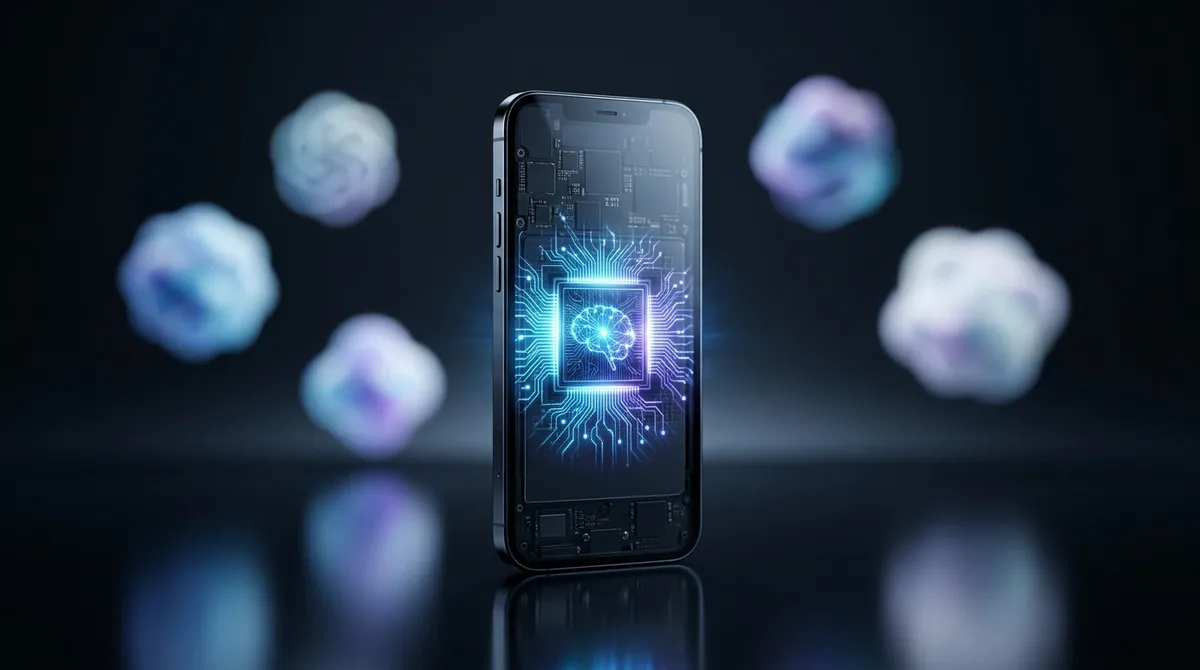
Here's the pivot that MKBHD's argument builds toward, and it's the one worth sitting with: the AI battlefield may be shifting from cloud-based chatbots to on-device models. If that shift happens — and the industry signals suggest it's already underway — then Apple's hardware prowess goes from liability to lead.
On-device AI runs locally, without a server round-trip, which means it's faster, more private, and functional offline. Apple's silicon — the same chip architecture that made the M-series Macs the benchmark for laptop performance — is already designed with the kind of Neural Engine horsepower that on-device AI demands. Apple hasn't been asleep; it's been building the track while everyone else was racing on someone else's road.
If the future of AI is a model that runs directly on your phone, your laptop, or your earbuds — processing your data locally without shipping it to a data center — then the question stops being "whose chatbot is smarter?" and starts being "whose device can handle this best?" That second question is one Apple has been quietly answering for years.
The Threat Nobody Is Dismissing
None of this means Apple can coast. The genuine danger isn't that ChatGPT becomes too good a phone app. The danger is that OpenAI — or another AI-native company — builds compelling hardware of its own. An AI-native device that doesn't just run an app but is the interface: always-on, deeply personalized, genuinely useful in ways that feel less like a feature and more like a presence.
Rumors of exactly that kind of device have been circulating around OpenAI's camp. If a credible AI-native hardware product lands and captures even a fraction of the cultural energy that the original iPhone did, Apple's "good enough" software defense starts looking a lot thinner. The history of tech is littered with incumbents who had the ecosystem advantage right up until someone changed what the ecosystem was.
Apple beat Nokia not by making a better phone. It made the phone irrelevant as a category and redefined what the device was for. The uncomfortable question Apple has to answer is whether someone is about to do the same thing to them.
So Did Apple Actually Lose?
In the software AI race, as it's currently being run? Yes, genuinely — and it's worth saying that plainly rather than dressing it up in corporate euphemism. ChatGPT, Gemini, and Claude are producing more capable, more conversationally fluid, more creatively useful AI than Apple Intelligence is right now. That's not a controversial read; it's a consensus one.
But "lost the software race" and "lost the AI era" are not the same sentence. The more useful frame might be that Apple is playing a different game on a longer timeline — betting that the decisive hardware platform for running AI hasn't been built yet, and that when it arrives, it'll look a lot like the devices Apple already makes.
That bet could be exactly right. It could also be the kind of confident miscalculation that looks obvious in retrospect. The answer probably depends on how fast AI-native hardware from competitors materializes, and how good Apple's own software gets between now and then.
What's clear is that the interesting question was never "is Apple behind in AI?" — it obviously is. The interesting question is whether the race it's falling behind in is the race that ultimately decides anything. And on that one, the jury is still very much deliberating.