
A Decade-Long Climate Puzzle
Ten years ago, Bradley Markle, an assistant professor at the Institute of Arctic and Alpine Research at the University of Colorado Boulder, discovered something puzzling while examining Antarctic temperature records. According to reports, he noticed an odd pattern that would eventually challenge fundamental assumptions about how polar climate systems work.
The mystery centered on why different regions of Antarctica seemed to respond so differently to temperature changes, with some areas experiencing far more dramatic warming or cooling than others.
The Greenhouse Effect Takes Center Stage
New research has finally provided answers to this Antarctic climate puzzle. According to reports, scientists have discovered that Antarctica's regional temperature changes are governed more by the nonlinear greenhouse effect than by the traditional Planck response that climate models typically rely on.
This finding represents a significant shift in understanding polar climate dynamics. The research reveals that warmer Antarctic regions appear to warm or cool more dramatically because water vapor amplifies greenhouse trapping as temperature rises. This creates a feedback loop where the warmest areas become the most sensitive to change.
Ancient Ice Reveals Modern Secrets
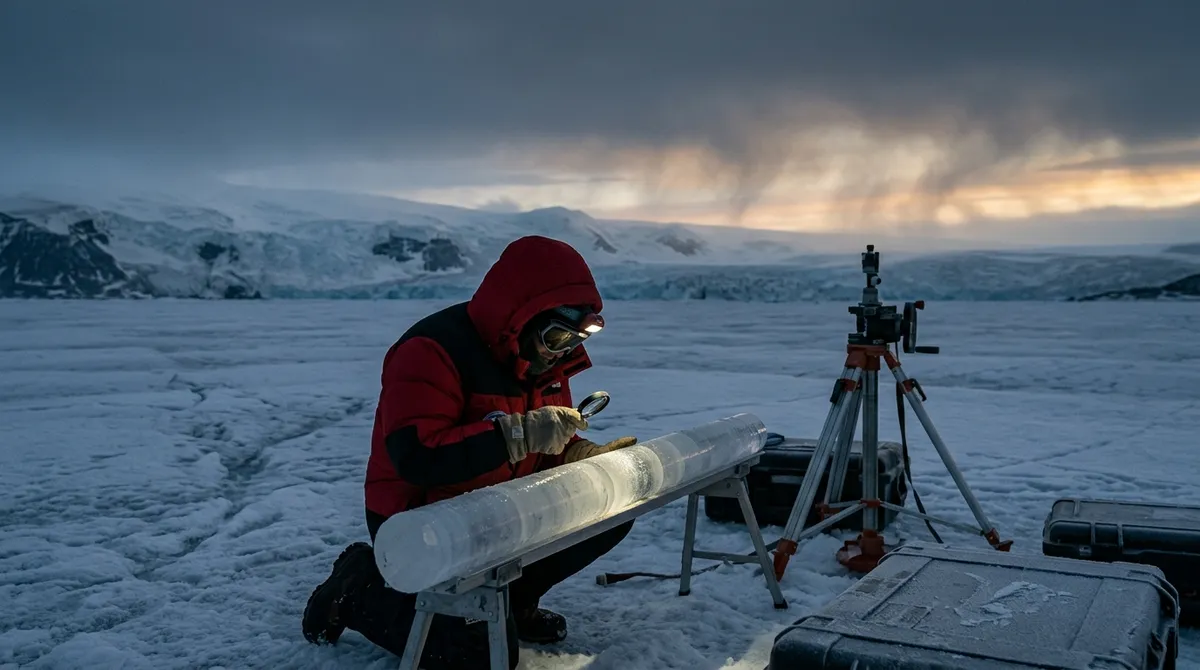
The breakthrough came from analyzing paleoclimate records, particularly ice cores that span an impressive 160,000 years of Earth's climate history. These ancient archives proved crucial for understanding the climate processes playing out in Antarctica today.
According to reports, the ice core data revealed hidden rules of the climate system that weren't apparent from shorter-term observations. This long-term perspective was essential for identifying the nonlinear greenhouse effect's role in Antarctic temperature variations.
Why Antarctica Doesn't Warm Evenly
The research explains a fundamental question about Antarctic climate behavior: why the continent doesn't warm evenly across its vast expanse. The answer lies in the complex relationship between temperature, water vapor, and greenhouse gas trapping.
In warmer regions of Antarctica, higher temperatures lead to increased water vapor in the atmosphere. This water vapor then acts as a greenhouse gas, trapping more heat and creating a amplifying effect. Conversely, in cooler regions, this feedback mechanism is less pronounced, leading to more moderate temperature changes.
This discovery positions Antarctica as something of an "heat exhaust valve" for Earth's climate system, with different regions responding in dramatically different ways to global climate patterns.
Implications for Climate Models
As climate scientists work to predict Antarctica's response to modern warming, this finding could fundamentally reshape their assumptions about polar climate dynamics. Traditional models that relied primarily on the Planck response may need significant updates to account for the dominant role of the nonlinear greenhouse effect.
The research has particular importance for understanding Antarctica's ice sheet history and predicting its future behavior. According to reports, the findings could influence how scientists model ice sheet responses to continued global warming.
The Broader Climate Picture
This Antarctic research contributes to our growing understanding of climate feedback mechanisms across the globe. The discovery that greenhouse effects can dominate over traditional temperature responses in polar regions adds another layer of complexity to climate science.
The work also demonstrates the continuing value of paleoclimate research in solving modern climate questions. The 160,000-year perspective provided by ice cores offered insights that shorter-term studies couldn't capture, highlighting the importance of long-term climate records.
Looking Forward
The resolution of this decade-long mystery opens new avenues for climate research and modeling. Understanding why Antarctica's warmest regions are most sensitive to change provides scientists with better tools for predicting how the continent will respond to future climate scenarios.
As researchers continue to refine climate models based on these findings, the work stands as an example of how patient, long-term scientific investigation can eventually yield breakthrough insights into Earth's complex climate systems.