
The AI Energy Dilemma
As artificial intelligence continues its rapid expansion, a critical infrastructure challenge is emerging from an unexpected source: heat. The massive data center buildout required to support AI operations is creating unprecedented cooling demands, with cooling systems consuming a major share of electricity and water resources across facilities.
According to reports, data centers are projected to account for anywhere from 9% to 17% of total electricity usage in the U.S., highlighting the scale of the energy challenge facing the industry. As operators grapple with power constraints, sustainability pressure, and increasingly hot chips, more efficient cooling is becoming a competitive infrastructure priority.
Nuclear Science Meets Silicon Valley
Enter Ferveret, an MIT-born startup that's applying an unusual approach to this cooling crisis. The company is leveraging nuclear reactor heat-transfer principles to develop innovative cooling solutions for AI data center servers, creating what they call a water-free, liquid immersion system.
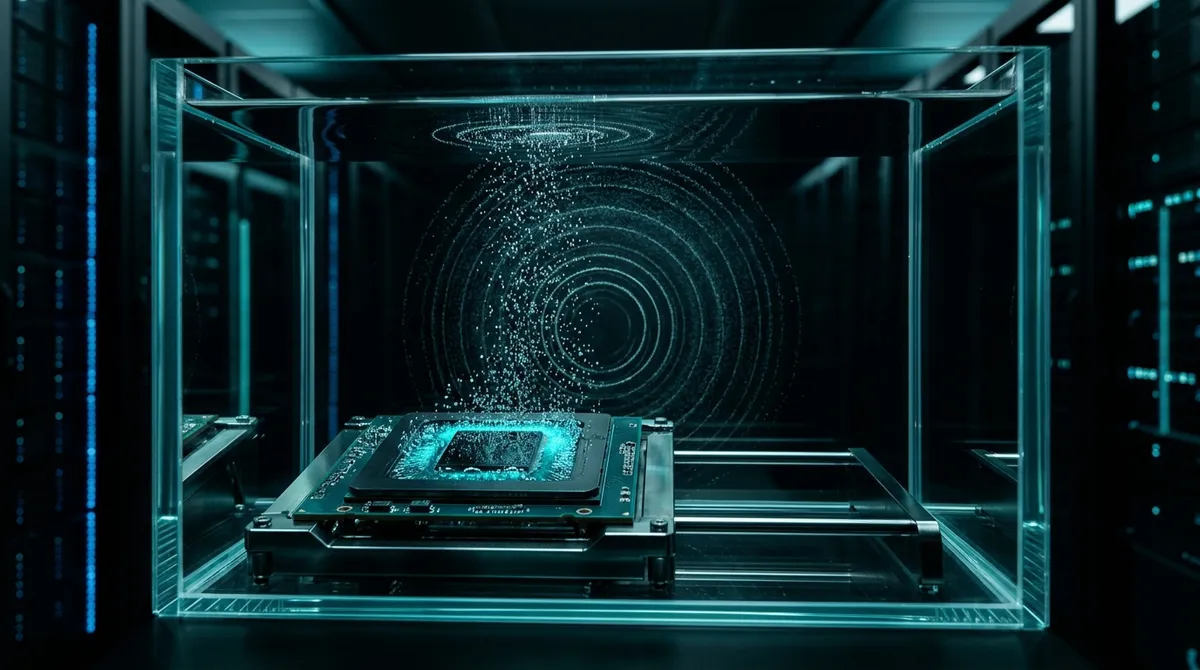
The startup's breakthrough technology, known as Adaptive Phase Cooling, represents a significant departure from traditional cooling methods. According to reports, this system produces smaller, faster-detaching bubbles that improve heat transfer efficiency, boost compute performance, and reduce energy waste.
Beyond Traditional Cooling Methods
The nuclear-inspired approach addresses several critical limitations of current cooling infrastructure. Traditional air cooling systems are struggling to keep pace with the heat output of modern AI processors, while water-based cooling systems face sustainability concerns in regions with water scarcity.
Ferveret's liquid immersion system eliminates the need for water while potentially delivering superior heat transfer performance. The technology's bubble-based heat transfer mechanism, derived from nuclear reactor cooling principles, offers a more efficient pathway for removing heat from high-performance computing components.
The Sustainability Factor
Water-free cooling solutions are becoming increasingly important as data center operators face mounting pressure to operate sustainably. According to reports, this technology matters particularly for renewable-powered data centers, where every efficiency gain translates to reduced environmental impact and operational costs.
The startup's approach could help operators squeeze more AI computational power from every watt of electricity consumed, addressing the fundamental challenge of the race to maximize AI tokens per unit of energy.
Engineering the Future of AI Infrastructure
The development represents a convergence of nuclear engineering expertise with cutting-edge computing infrastructure needs. By applying heat-transfer principles originally developed for nuclear reactors to the challenge of cooling AI processors, Ferveret is pioneering a new category of cooling technology.
The liquid immersion approach involves submerging servers in specially designed cooling fluids, allowing for more direct and efficient heat removal compared to traditional air-based systems. The nuclear-inspired bubble dynamics enable faster heat transfer while maintaining system reliability.
Market Implications
As AI demand continues driving massive data center expansion, cooling efficiency is becoming a critical differentiator for operators. The ability to run more powerful AI workloads within existing power constraints could provide significant competitive advantages.
According to reports, the technology could become a hidden enabler of AI growth, addressing the fundamental infrastructure bottlenecks that threaten to limit AI advancement. The water-free aspect also positions the technology well for deployment in water-scarce regions or facilities prioritizing environmental sustainability.
Looking Ahead
The intersection of nuclear science and data center cooling represents an innovative approach to one of the tech industry's most pressing infrastructure challenges. As AI workloads continue growing in complexity and scale, solutions like Ferveret's Adaptive Phase Cooling could play a crucial role in enabling sustainable AI infrastructure expansion.
The startup's nuclear-inspired cooling system demonstrates how cross-disciplinary engineering approaches can address modern technological challenges, potentially transforming how the industry thinks about the relationship between energy, cooling, and computational performance in the AI era.