
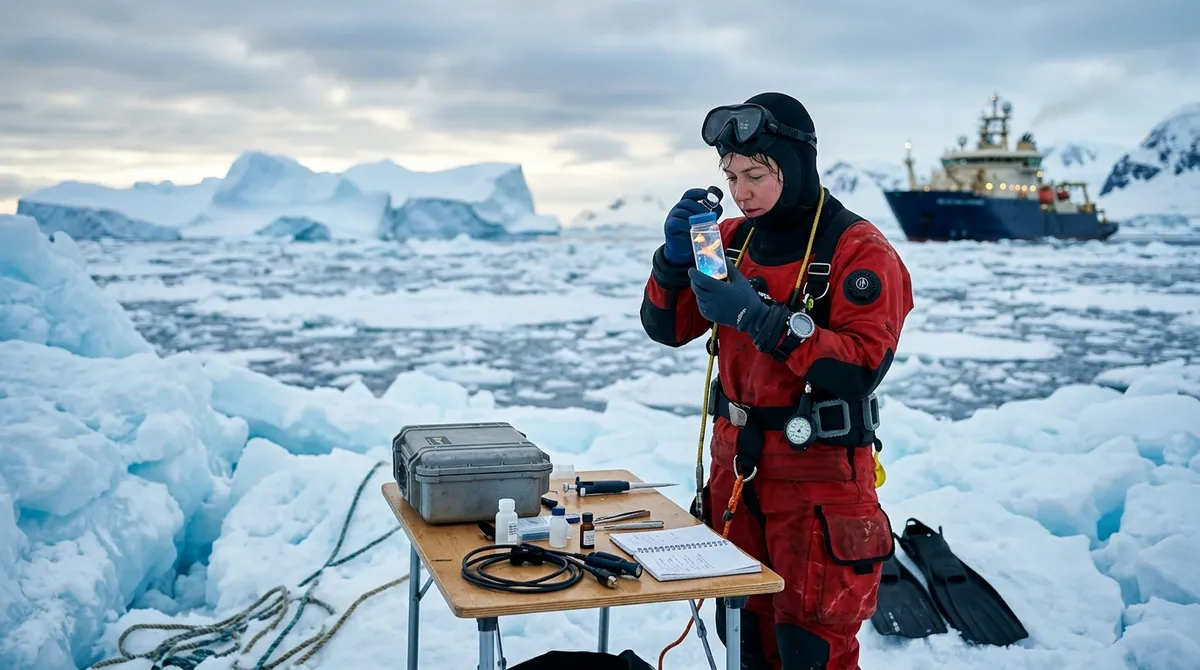
Diving into Antarctica's Icy Waters for Cancer Research
In one of the most remote and dangerous environments on Earth, researchers from the University of South Florida have completed a remarkable six-week expedition that could advance the fight against melanoma. According to reports, the team recently returned from Antarctica where they studied ascidians—commonly known as sea squirts—that harbor bacteria with the remarkable ability to kill melanoma cells.
This groundbreaking research builds upon a discovery made two decades ago by chemistry professor Bill Baker, demonstrating how scientific breakthroughs can take years to fully develop from initial observation to potential clinical application.
The Power of Natural Drug Discovery
The expedition highlights a crucial aspect of modern medicine that many people don't realize: over half of all FDA-approved drugs originate from natural sources. This statistic underscores why researchers are increasingly turning to extreme environments like Antarctica to discover new therapeutic compounds.
Melanoma remains one of the deadliest forms of skin cancer, making the search for effective treatments critically important. The harsh Antarctic environment has created unique evolutionary pressures that force organisms to develop specialized chemical defenses—defenses that humans may be able to repurpose as powerful medicines.
Extreme Exploration Meets Medical Innovation
The Antarctic expedition represents the intersection of adventure science and medical research. According to reports, the team faced dangerous diving conditions in some of Earth's most challenging waters to collect these valuable specimens. The extreme isolation and harsh conditions of Antarctica have allowed organisms like ascidians to evolve in unique ways, developing chemical compounds that simply don't exist elsewhere on the planet.
These sea squirts have formed symbiotic relationships with bacteria that produce melanoma-killing compounds, creating a natural pharmacy beneath the Antarctic ice. The research team's work involves understanding how these organisms survive and thrive in such extreme conditions, and more importantly, how their biochemical innovations could be translated into human medicine.
From Discovery to Development
The current expedition represents a significant milestone in what researchers describe as a long pipeline from initial discovery to potential treatment. Baker's original discovery occurred 20 years ago, illustrating the patience and persistence required in natural product research. The team is now in the crucial lab analysis phase, working to understand exactly how these compounds function and how they might be developed into effective cancer treatments.
This timeline reflects the reality of drug development, where promising discoveries can take decades to reach patients. However, the potential payoff—a new weapon against melanoma—makes the lengthy process worthwhile.
Nature as Pharmacy
The Antarctic research showcases how lesser-known ocean creatures could hold keys to treating major diseases. Sea squirts, despite their simple appearance, represent sophisticated biological systems that have evolved over millions of years. Their bacterial partners produce compounds that could revolutionize cancer treatment, demonstrating nature's incredible capacity for chemical innovation.
The symbiotic relationship between ascidians and their bacterial inhabitants exemplifies how organisms in extreme isolation develop specialized survival mechanisms. These mechanisms often involve producing powerful chemicals that can kill competing organisms—the same property that makes them potentially valuable as cancer treatments.
The Human Element
Behind this cutting-edge research are dedicated scientists willing to risk their safety in one of Earth's most remote environments. The team's willingness to endure Antarctic conditions for six weeks demonstrates the commitment required to push the boundaries of medical research.
According to reports, the expedition's findings could accelerate the development of new melanoma treatments, potentially shortening the journey from laboratory discovery to clinical application. As researchers continue analyzing their Antarctic specimens, the scientific community watches with interest to see how these unique marine organisms might contribute to the next generation of cancer therapies.
The intersection of extreme exploration and medical innovation continues to yield promising results, proving that sometimes the most valuable discoveries require venturing to the planet's most challenging frontiers.