
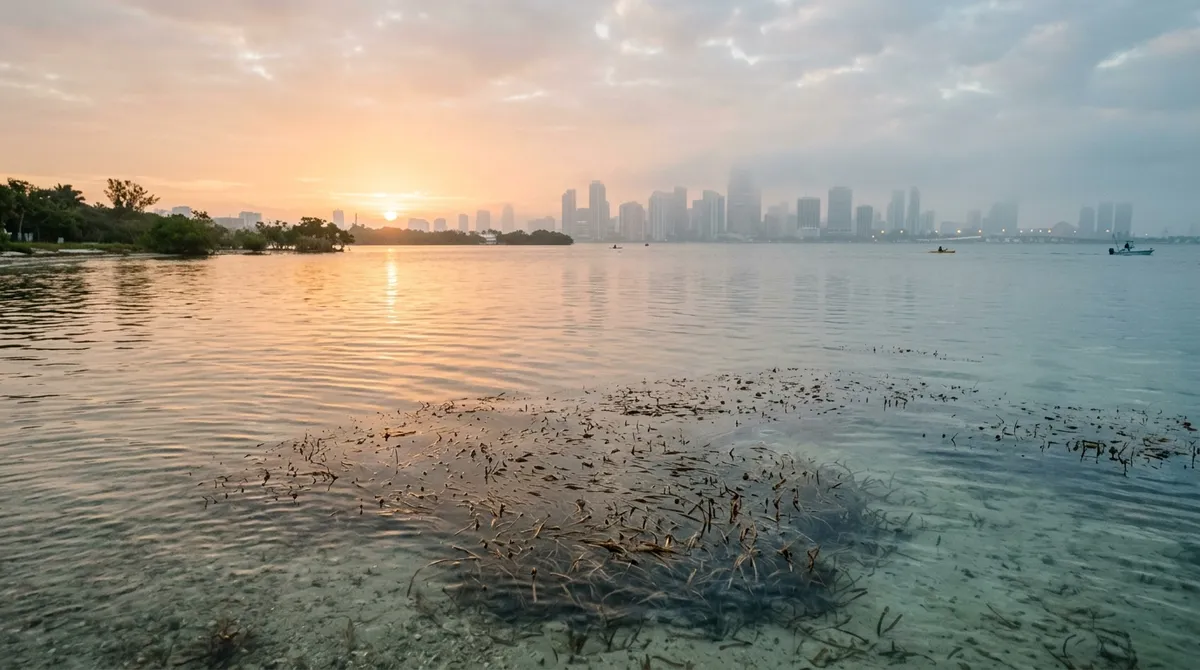
Critical Ecosystem Under Threat
A comprehensive 20-year study has documented alarming changes in Biscayne Bay, revealing that climate change and sea level rise are fundamentally altering the chemistry of this vital South Florida ecosystem. According to reports, researchers analyzed monthly water quality data from 34 monitoring stations between 2001 and 2021, documenting measurable shifts in temperature, salinity, dissolved oxygen, and pH levels.
The findings show that Biscayne Bay is becoming warmer, saltier, and more acidic—changes that pose significant threats to the region's ecosystems, fisheries, and water resources. These chemical transformations represent more than just environmental concerns; they signal urgent risks to coastal resilience and resource management as climate impacts continue to accelerate.
Economic and Ecological Hub at Risk
Biscayne Bay serves as a critical economic and ecological center for South Florida, supporting tourism, fisheries, and wildlife habitats. The bay functions as nursery grounds for endangered species, including great hammerhead sharks, making these documented chemical shifts particularly concerning for marine biodiversity.
The research reveals that the bay is essentially "becoming more ocean-like," a transformation that poses problems for an estuary ecosystem. This change threatens the delicate balance that has historically made Biscayne Bay a thriving habitat for diverse marine life and a valuable resource for human communities.
Ocean Acidification and Marine Food Chains
One of the most significant concerns highlighted by the study is ocean acidification and its specific impact on seagrass ecosystems. According to reports, acidification threatens the marine food chain that seagrass systems support, potentially disrupting the foundational elements of the bay's ecological structure.
Seagrass beds serve as crucial nursery areas for many fish species and provide essential habitat for marine life. As acidification continues, these underwater meadows face increasing stress, which could cascade through the entire marine ecosystem.
Freshwater Resources Under Pressure
Beyond marine impacts, the study documents saltwater intrusion into freshwater aquifers, a development with serious implications for South Florida's drinking water supply. As sea levels rise and salinity increases in the bay, the boundary between saltwater and freshwater systems shifts inland, potentially contaminating groundwater sources that communities depend on.
This saltwater intrusion represents a growing challenge for regional water management, particularly as South Florida's population continues to grow and freshwater demands increase.
Marine Nurseries in Jeopardy
The role of Biscayne Bay as a nursery for sharks and other marine species is now under unprecedented stress, according to the research. Great hammerhead sharks and other endangered species rely on the bay's specific water chemistry and temperature conditions for successful reproduction and early development.
As these conditions change, the survival rates and health of juvenile marine life could decline, potentially affecting fish populations throughout the broader Atlantic ecosystem.
Data-Driven Environmental Management
The 20-year dataset provides valuable insights for communities and policymakers working to prepare for future coastal impacts. The comprehensive monitoring effort, spanning more than three decades of monthly observations, offers a detailed picture of how climate change manifests in real-world ecosystems.
This data becomes increasingly important as coastal communities seek to implement adaptive management strategies and develop resilience plans for ongoing climate impacts.
Looking Forward
The study's findings underscore the interconnected nature of climate change impacts on coastal systems. As Biscayne Bay continues to transform, the effects ripple through tourism, fisheries, water resources, and recreation—all critical components of South Florida's economy and quality of life.
The research demonstrates how global climate change translates into local environmental consequences, making abstract climate science tangible through documented impacts on a recognizable and economically important ecosystem. For South Florida, these findings represent both a warning and an opportunity to implement science-based coastal protection and adaptation strategies.