
Breakthrough Discovery in Conservation Biology
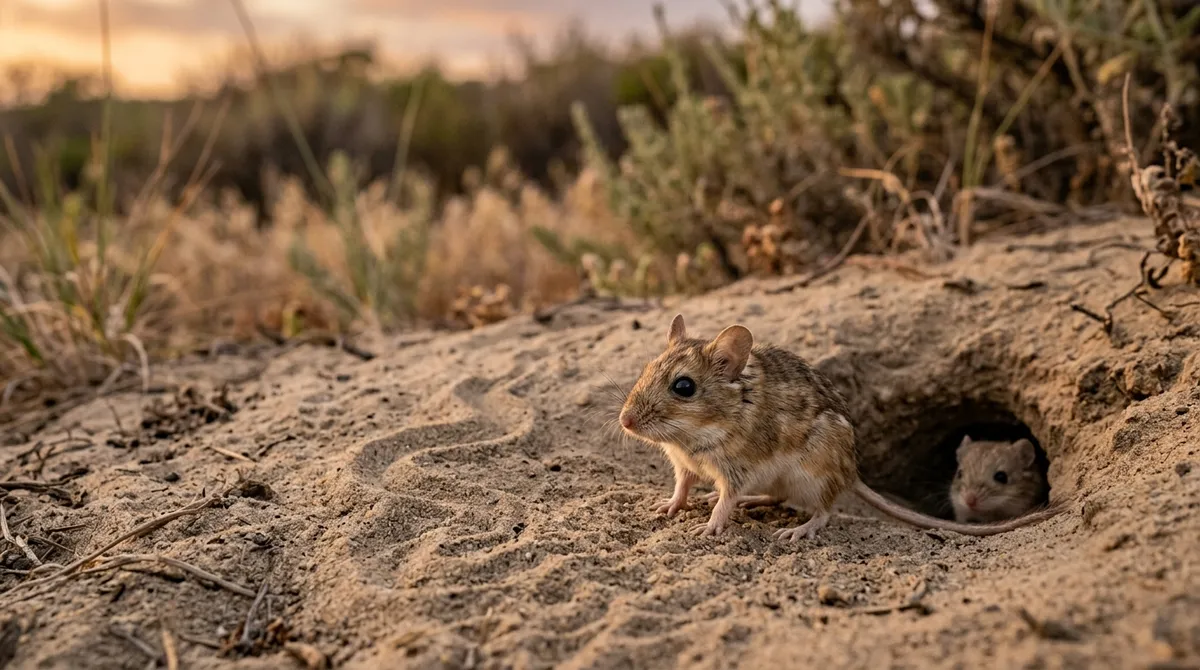
Researchers at San Diego Zoo Wildlife Alliance have made a groundbreaking discovery that could revolutionize how we prepare endangered species for life in the wild. According to their findings, pregnant Pacific pocket mice that are trained to fear snakes can pass that learned fear directly to their female offspring, who then display heightened vigilance around predators.
This represents the first documented evidence in an endangered mammal that maternal predator training can be inherited by the next generation, potentially transforming conservation breeding programs worldwide.
The Conservation Challenge
Endangered species reintroduction programs have long struggled with a fundamental problem: captive-bred animals often lack the predator awareness needed to survive in the wild. Traditional approaches require labor-intensive individual training of every animal before release, making these programs costly and difficult to scale.
The Pacific pocket mouse, a critically endangered species on the brink of extinction, exemplifies this challenge. Conservationists typically raise young in captivity before releasing them as adults, but survival rates suffer when these animals encounter predators they've never learned to fear.
A Revolutionary Approach
The San Diego Zoo Wildlife Alliance study reveals a potentially more efficient solution. By training pregnant females to recognize snake threats, researchers found that their female offspring inherited this crucial survival skill without any direct training themselves.
This discovery suggests what researchers are calling a "lazy conservation" approach—where training pregnant animals could scale up reintroduction programs while reducing costs compared to individual antipredator training methods.
The Mystery of Sex-Specific Inheritance
One of the most intriguing aspects of the research is its sex-specific effect. According to reports, only female offspring inherited the fear response from their trained mothers. This unexpected finding raises fascinating questions about how stress and gender interact in animal behavior, opening new avenues for understanding behavioral inheritance patterns.
The selective inheritance pattern could have significant implications for conservation strategies, as understanding why males don't inherit this trait might help researchers optimize training protocols for different species.
Three Competing Theories
While the inheritance effect is clear, scientists still don't fully understand how the learned fear transfers from mother to offspring. Researchers have identified three competing hypotheses for the transmission mechanism:
- Prenatal hormones: Stress hormones during pregnancy might influence fetal brain development
- Maternal behavior: Trained mothers might behave differently around their young, teaching vigilance through example
- Odor cues: Chemical signals could communicate threat information to offspring
Unraveling which mechanism—or combination of mechanisms—drives this inheritance will be crucial for applying the technique to other endangered species.
Broader Conservation Implications
The implications extend far beyond the Pacific pocket mouse. If this maternal-learning model works across species, it could transform endangered mammal recovery efforts globally. The scalability advantage is particularly compelling: instead of training dozens or hundreds of individual animals, conservation programs could focus resources on pregnant females and achieve broader population-level effects.
This approach could be especially valuable for species with large litters or those where individual training is particularly challenging due to size, temperament, or habitat requirements.
Looking Forward
The research opens exciting possibilities for conservation innovation at the intersection of behavioral biology and wildlife management. As endangered species programs worldwide face increasing pressure to improve success rates while managing limited resources, this discovery offers a potential pathway to more efficient and effective reintroduction strategies.
The findings also highlight how much we still have to learn about behavioral inheritance in mammals. Understanding these mechanisms could unlock new approaches not just for conservation, but for our broader understanding of how learned behaviors pass between generations in the animal kingdom.
For the critically endangered Pacific pocket mouse, this discovery represents new hope. By harnessing the power of maternal inheritance, conservationists may finally have found a more effective way to prepare captive-bred animals for the challenges they'll face in the wild.