
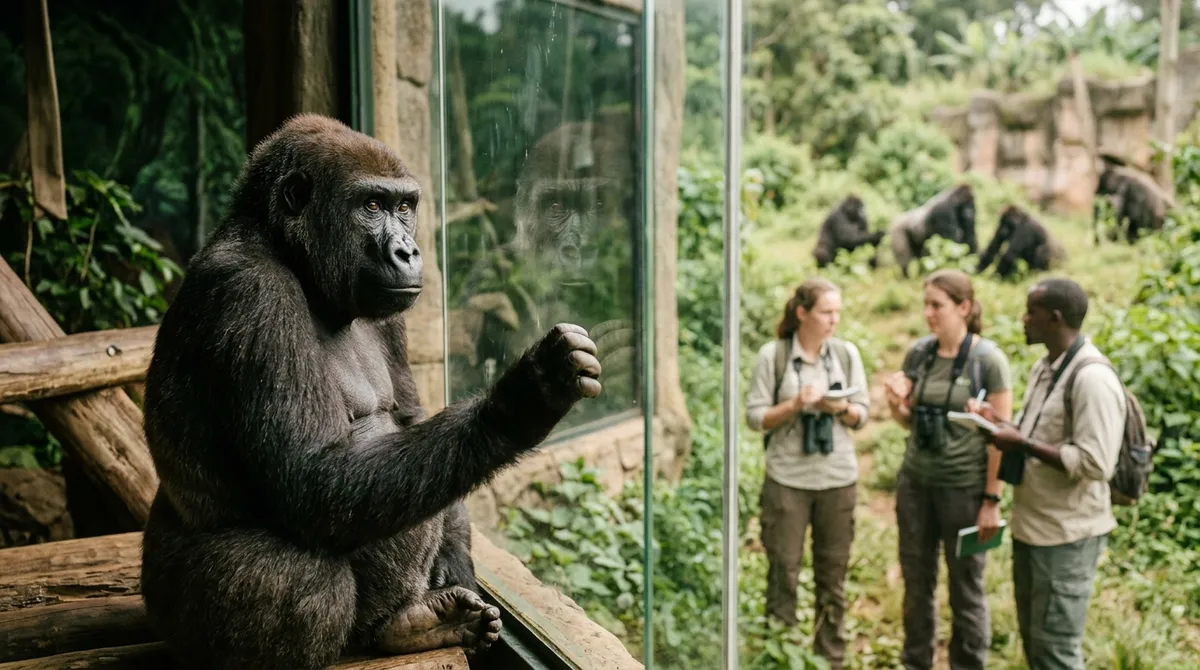
Revolutionary Findings Challenge Assumptions About Primate Intelligence
After two decades of groundbreaking research at Leipzig Zoo's Wolfgang Köhler Primate Research Centre, scientists are fundamentally reshaping our understanding of great ape cognition. The findings reveal that these remarkable creatures mirror human reasoning in ways that challenge long-held assumptions about primate intelligence and social behavior.
According to reports, great apes actively seek social gossip over food rewards, suggesting their priorities extend far beyond basic survival needs. This discovery points to a sophisticated social intelligence that researchers are only beginning to understand.
The Social Complexity Revolution
The research reveals that personality and relationship history, rather than just immediate mood, drive cooperation and conflict resolution among great apes. This finding suggests a level of social sophistication that parallels human interpersonal dynamics.
Perhaps most intriguingly, chimpanzees have been observed updating their beliefs in a distinctly human-like manner. According to the research, they weigh evidence strength before changing their minds, demonstrating a cognitive flexibility that mirrors our own decision-making processes.
Environmental Impact on Cognition
One of the most significant discoveries involves what researchers call the "captivity effect." Wild apes demonstrate more cautious behavior compared to their zoo counterparts, suggesting that environment plays a crucial role in shaping cognition. This finding has profound implications for how we understand the relationship between setting and intelligence in primates.
The research indicates that studying apes in groups rather than pairs reveals their true social intelligence, highlighting the importance of social context in cognitive development and expression.
Technological Advances in Research
The field has embraced cutting-edge technology to unlock these insights. Reports indicate that chimpanzees at Leipzig Zoo have been using touchscreen controls to navigate virtual forests and locate food rewards, demonstrating their ability to adapt to and master digital interfaces.
This technological integration represents a methodological revolution in primatology, allowing researchers to create controlled yet engaging environments that reveal cognitive abilities previously hidden from view.
The EVApeCognition Database
A major milestone in the field is the introduction of EVApeCognition, a standardized database containing 18 years of experimental data. This comprehensive resource promises to accelerate research by providing scientists worldwide with access to decades of carefully collected behavioral and cognitive data.
The database represents a shift toward more collaborative and systematic approaches to understanding great ape cognition, moving beyond isolated studies to create a comprehensive picture of primate intelligence.
Implications for Conservation and Ethics
These findings arrive at a critical time when conservation efforts and ethical treatment of captive apes increasingly depend on understanding their true cognitive and social needs. The research suggests that great apes require more complex social and intellectual stimulation than previously recognized.
The discoveries about their sophisticated reasoning abilities and social priorities have immediate practical implications for how we house and interact with apes in captivity. Understanding that these animals prioritize social information and maintain complex relationship histories changes how we approach their care and enrichment.
Looking Forward
The field of great ape research is undergoing a transformation that extends beyond academic curiosity. As scientists continue to document the remarkable parallels between great ape and human intelligence, these findings will likely influence everything from conservation strategies to ethical frameworks for primate research.
The shift toward larger-group studies and the integration of captive and wild research settings promises to reveal even more about the true nature of primate cognition. As technology continues to evolve, researchers will have new tools to explore the depths of great ape intelligence, potentially uncovering cognitive abilities that further blur the lines between human and non-human reasoning.
This research represents more than scientific progress—it's reshaping our understanding of what it means to be intelligent, social, and curious in the animal kingdom.