
A Conservation Success Story Against All Odds
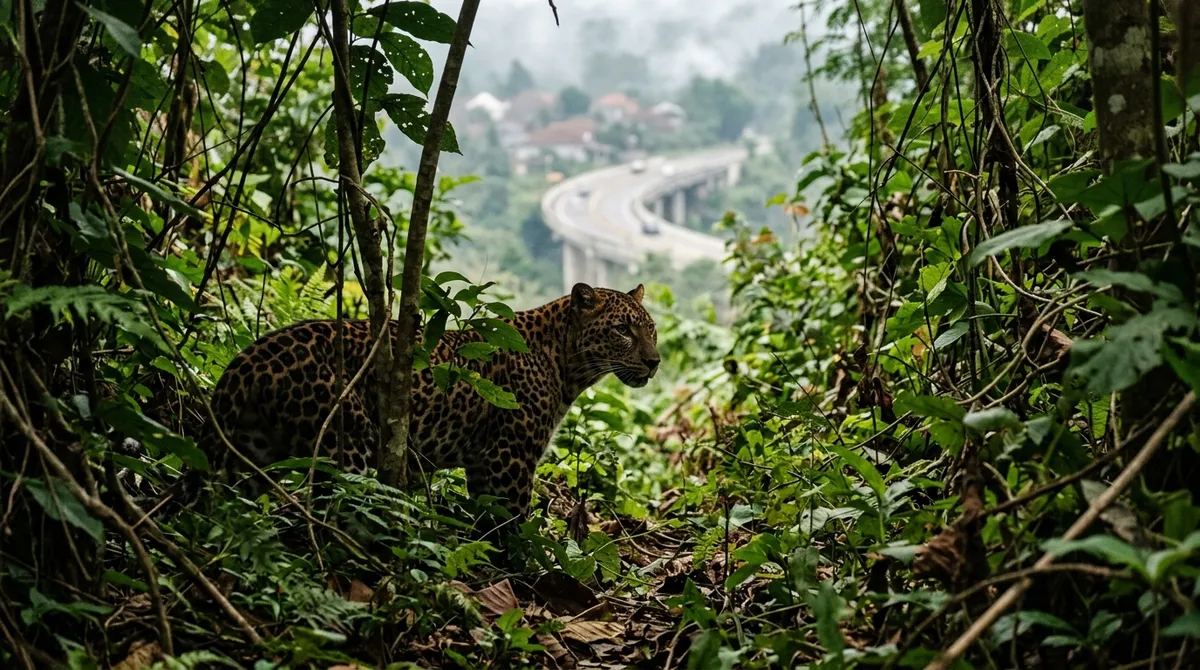
In one of the world's most densely populated islands, where over 150 million people share space with wildlife, an unlikely conservation success story is unfolding. University of Twente research has revealed how the Javan leopard—one of Earth's rarest big cats with fewer than 350 individuals remaining—manages to survive in Java's fragmented landscape.
The study challenges conventional conservation wisdom by showing that these magnificent predators don't just rely on protected reserves. Instead, according to reports, they're thriving in secondary forests and regenerating woodlands that many would consider "second-rate" habitat.
Technology Reveals Hidden Wildlife Patterns
Using advanced camera traps and spatial modeling techniques, researchers mapped exactly where these elusive cats live and hunt across Java's complex landscape. The technology-driven approach provides unprecedented insight into how large carnivores adapt to human-dominated environments.
The research demonstrates that corridors linking fragmented habitats play a critical role in the species' survival. These pathways allow leopards to move between forest patches, access diverse prey, and maintain genetic diversity across their range.
Regenerating Forests: The Unexpected Heroes
One of the study's most significant findings centers on the importance of regenerating forests. While pristine wilderness areas grab conservation headlines, the data shows that secondary growth forests are doing much of the heavy lifting in keeping Javan leopards alive.
These recovering woodlands provide the diverse prey base that leopards need to survive, according to reports. Rather than being conservation afterthoughts, regenerating forests represent critical habitat that supports the species' resilience in an increasingly crowded landscape.
The Human-Wildlife Interface Challenge
Java presents a unique conservation challenge as roads, railways, and expanding cities continue to fragment the island's remaining forests. The research provides urgent, actionable guidance for urban planners and conservation managers about where reforestation efforts and habitat corridors could make the biggest difference.
The study's spatial modeling reveals exactly where strategic interventions—whether new forest corridors, improved road crossings, or targeted reforestation—could have maximum impact on leopard survival.
Beyond Protected Areas
The findings underscore a critical shift in conservation thinking: protected areas alone cannot save large predators in human-dominated landscapes. The research demonstrates that conservation success requires a landscape-level approach that includes corridors, regenerating forests, and careful planning around human infrastructure.
This represents a departure from traditional "fortress conservation" models that focus primarily on establishing isolated protected zones. Instead, the Javan leopard's survival story points toward integrated landscape management that works with, rather than against, human development patterns.
A Microcosm of Global Conservation Challenges
Java serves as a living laboratory for understanding how wildlife can persist in densely populated regions. As large carnivores vanish globally due to habitat loss and human pressure, the Javan leopard's story offers both hope and urgent warnings.
The research provides a blueprint that could inform conservation efforts for threatened species worldwide, particularly in regions where human populations and wildlife must coexist in limited space.
Looking Forward
While the study reveals the Javan leopard's remarkable resilience, researchers emphasize that this conservation success story remains fragile. With continued development pressure and climate change impacts, maintaining the habitat connectivity that allows these cats to survive will require ongoing commitment and strategic planning.
The University of Twente research demonstrates that with the right combination of technology, scientific understanding, and landscape-level planning, even the world's rarest big cats can find ways to persist in our increasingly crowded world—but only if we act on the insights science provides.