
Revolutionary Discovery Beneath the Forest Canopy
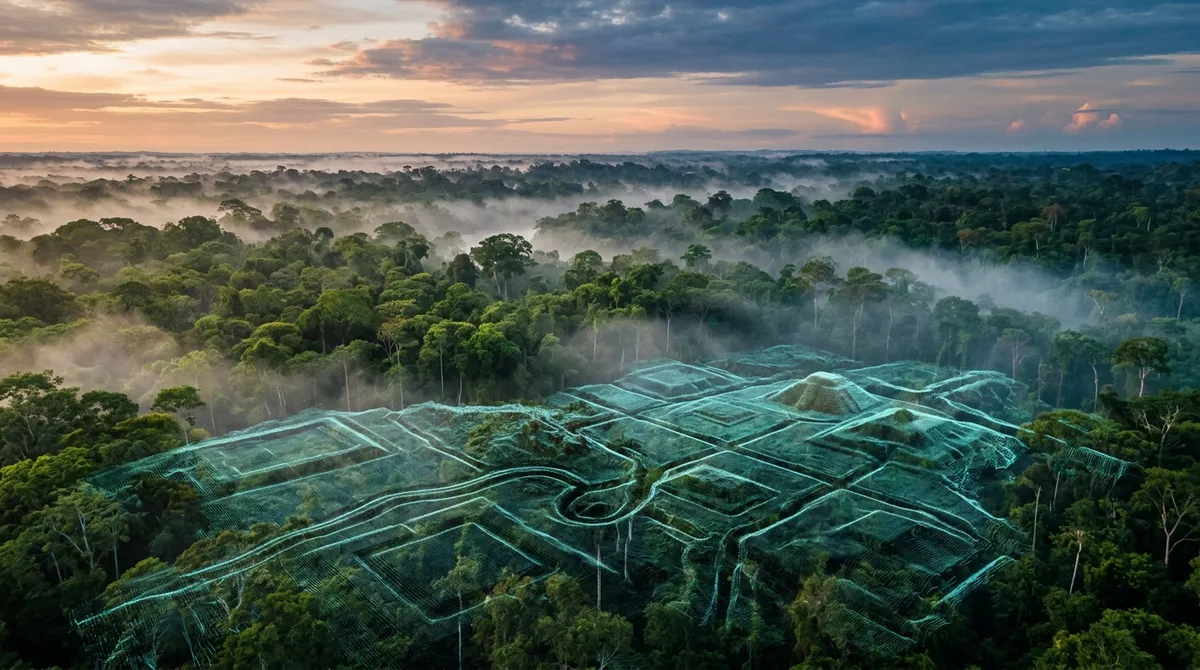
Cutting-edge laser technology has unveiled one of archaeology's most significant recent discoveries: a vast, sophisticated civilization hidden beneath the Amazon rainforest for over 600 years. The Casarabe culture, which flourished from AD 500 to 1400 across 20,000 km² in Bolivia's Llanos de Moxos, created an interconnected urbanized landscape that fundamentally challenges long-held assumptions about pre-Columbian Amazon societies.
Using lidar technology—which employs laser pulses to penetrate forest canopy and reveal the terrain beneath vegetation—researchers have mapped an intricate network of settlements, monumental architecture, and sophisticated infrastructure that rivals the engineering achievements of Andean civilizations.
A Four-Tier Urban Hierarchy
The discovery reveals a carefully planned settlement system organized in four distinct tiers. Primary settlements stretched up to 3 km², featuring impressive civic-ceremonial architecture including 20-meter conical pyramids and U-shaped public gathering structures. These monumental constructions were built on man-made platforms rising 5 meters and extending over 20 hectares.
Secondary and tertiary sites connected to these primary centers through an elaborate network of raised causeways and canals that linked forest islands across the landscape. The fourth tier consisted of isolated mounds scattered throughout the pampas, creating a comprehensive territorial organization that demonstrates remarkable urban planning capabilities.
Engineering Marvels and Water Management
According to reports, the Casarabe people developed sophisticated water-management systems including reservoirs and farm ponds designed for dry-season sustainability. Their drained-field agriculture system supported maize as the primary crop alongside diverse secondary crops, enabling food security across this vast territory.
The civilization also created Amazonian Dark Earths—engineered soils that combined charcoal, bone, and waste with native soil to enhance agricultural productivity. This innovation reflects a deep understanding of tropical soil management that sustained large populations for nearly a millennium.
Cosmology Meets Infrastructure
Remarkably, major architectural features and burial sites throughout the Casarabe territory show a consistent north-northwest orientation, suggesting that cosmological beliefs influenced their engineering and planning decisions. This integration of spiritual and practical considerations demonstrates the sophisticated worldview that guided their urban development.
Redefining Tropical Urbanism
The Casarabe civilization pioneered what researchers term "low-density tropical urbanism"—a model distinct from compact Andean cities like Tiwanaku. This approach allowed them to create extensive urban landscapes while maintaining ecological balance, offering striking parallels to other successful tropical urban systems like those found among the Maya and at Angkor.
Technology Transforms Archaeological Understanding
This discovery represents a triumph of modern technology in revealing hidden history. Lidar has emerged as archaeology's game-changer, enabling researchers to map vast areas of terrain obscured by dense vegetation that would have taken decades to survey using traditional methods.
The revelation comes at a crucial time as climate change and deforestation intensify focus on the Amazon's ecological and cultural significance. The findings directly challenge persistent colonial-era myths about the Amazon being "untamed wilderness" and instead reveal sophisticated indigenous land management systems.
Broader Historical Context
The Casarabe discovery fits into a growing body of evidence showing that Amazonian peoples engaged in plant domestication since the end of the Ice Age and developed early ceramic manufacturing techniques. This challenges 20th-century archaeological assumptions about the Amazon's capacity for supporting large, complex settlements.
The research demonstrates that indigenous peoples never forgot these landscapes—only outside observers dismissed their significance. This perspective shift represents part of archaeology's broader effort to move beyond colonial-era misconceptions about indigenous capabilities.
Lessons for Modern Sustainability
The Casarabe civilization offers valuable insights for contemporary sustainable development challenges. Their successful management of a challenging tropical environment for nearly a millennium provides practical examples of how human societies can thrive while maintaining ecological balance—lessons that become increasingly relevant as modern cities grapple with environmental sustainability.
This remarkable discovery not only rewrites our understanding of pre-Columbian Amazon history but also demonstrates how advanced technology can reveal the sophisticated achievements of ancient civilizations, forever changing our perspective on human adaptation and urban development in tropical environments.