
A Geological Cold Case Reopens
In the vast expanse of the North Pacific Ocean, between Japan and Canada, lies one of Earth's most enigmatic geological features: the Hess Rise. This massive underwater volcanic plateau, roughly T-shaped in configuration, has remained largely unstudied since 1980. Now, a German-Japanese research expedition aboard the vessel SONNE is embarking on an ambitious mission to unlock the secrets of this oceanic giant.
The timing of this expedition couldn't be more significant. According to reports, Hess Rise represents one of the world's largest oceanic plateaus, yet scientists have barely scratched the surface of understanding how it formed. The research team aims to test competing theories about the plateau's origins using cutting-edge technology and international collaboration.
Three Theories, One Remote Target
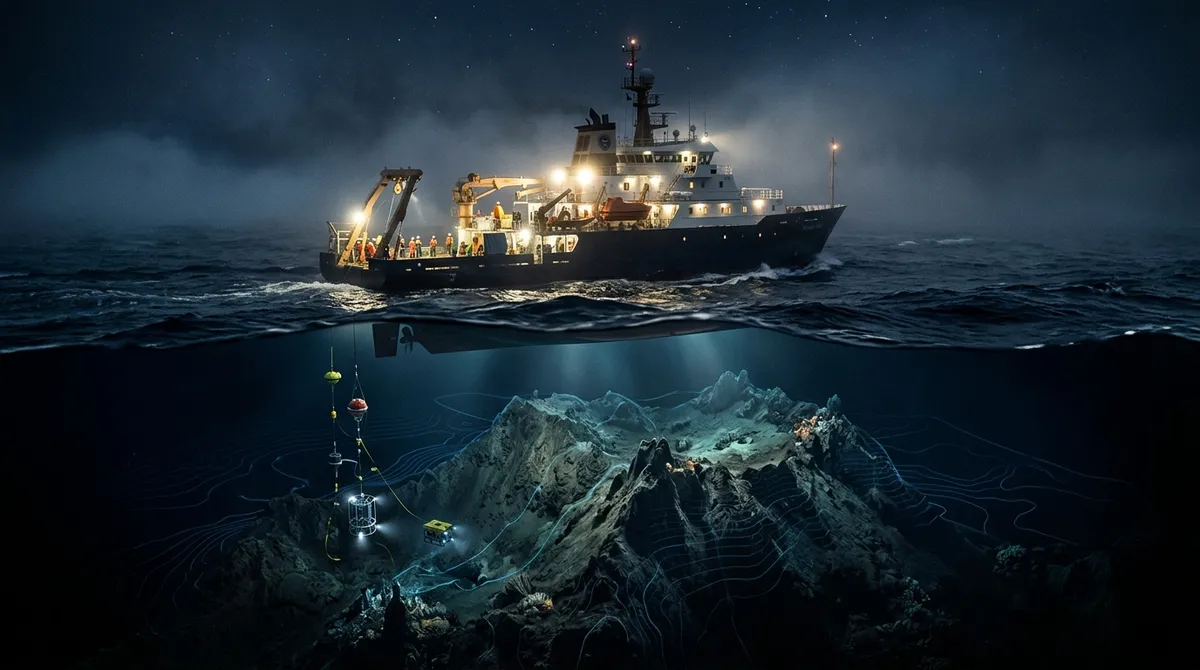
The scientific community has proposed multiple formation theories for Hess Rise, creating what researchers describe as a geological cold case waiting to be solved. The expedition will deploy sophisticated tools including seismometers, gravity and magnetic measurement devices, and advanced seafloor mapping technology to gather evidence that could support or refute these competing hypotheses.
Ocean bottom seismometers will play a crucial role in mapping the hidden structures beneath the seafloor. These instruments can detect seismic waves that reveal the internal architecture of the plateau, providing clues about how and when this massive volcanic formation came to be.
Windows into Ancient Volcanic Mega-Events
The research holds particular significance for understanding the Cretaceous period, which according to reports was characterized by extreme volcanic activity. Scientists believe that studying Hess Rise could provide insights into these ancient volcanic mega-events that shaped our planet's geological history.
The expedition represents more than just geological investigation—it embodies the growing trend of international collaboration in deep-ocean research. The German-Japanese partnership demonstrates how science diplomacy is advancing our understanding of Earth's most remote and challenging environments.
Investigating Lost Underwater Worlds
What makes this research particularly fascinating is the methodology required to study features that remain completely hidden beneath thousands of meters of ocean water. Scientists must rely on indirect methods to "see" these underwater volcanic worlds, using gravity measurements to detect density variations in the seafloor and magnetic readings to understand the plateau's volcanic history.
The seafloor mapping component will create detailed topographical profiles of Hess Rise, potentially revealing features that have remained unknown for decades. This comprehensive approach allows researchers to build a three-dimensional understanding of the plateau without ever directly observing it.
Implications for Pacific Geology
The data collected during this expedition could fundamentally reshape scientific understanding of Pacific tectonic history. One intriguing question the research aims to address is whether a single hotspot could have been responsible for building multiple giant Pacific plateaus, including Hess Rise.
This investigation into the plateau's formation theories reflects broader questions about how volcanic hotspots operate over geological timescales and their role in creating some of Earth's most massive underwater features.
Technology Meets Discovery
The expedition showcases how modern marine geology combines multiple technological approaches to solve ancient puzzles. By integrating seismic data, gravitational measurements, magnetic readings, and detailed mapping, scientists can construct comprehensive models of geological structures that would otherwise remain completely inaccessible.
As the SONNE begins its journey to this remote corner of the North Pacific, the scientific community awaits results that could rewrite textbooks on oceanic plateau formation and provide new insights into our planet's volcanic past.
The mission represents a significant step forward in deep-ocean exploration, demonstrating how international cooperation and advanced technology can unlock secrets that have remained hidden beneath the waves for millions of years. For science enthusiasts and geology researchers alike, the Hess Rise expedition promises to deliver groundbreaking discoveries about one of Earth's most mysterious underwater landscapes.