
The Sun's Hidden Transformation
Scientists have discovered a previously unknown shift in the sun's behavior by literally "listening" to our nearest star. According to new research, the sun's magnetic activity appears to be moving closer to its surface across recent 11-year solar cycles, potentially changing how we understand and predict space weather.
Using nearly four decades of data from the BiSON (Birmingham Solar Oscillations Network) project, researchers employed helioseismology—a technique that studies the sun's internal structure by analyzing sound waves—to uncover changes that traditional methods might miss.
When Traditional Measures Fall Short
While scientists typically rely on sunspot counts and solar flare observations to track solar activity, this new study suggests these surface indicators may not tell the complete story. According to reports, Solar Cycle 25 is showing unusual internal signatures even when surface indicators appear weaker than expected.
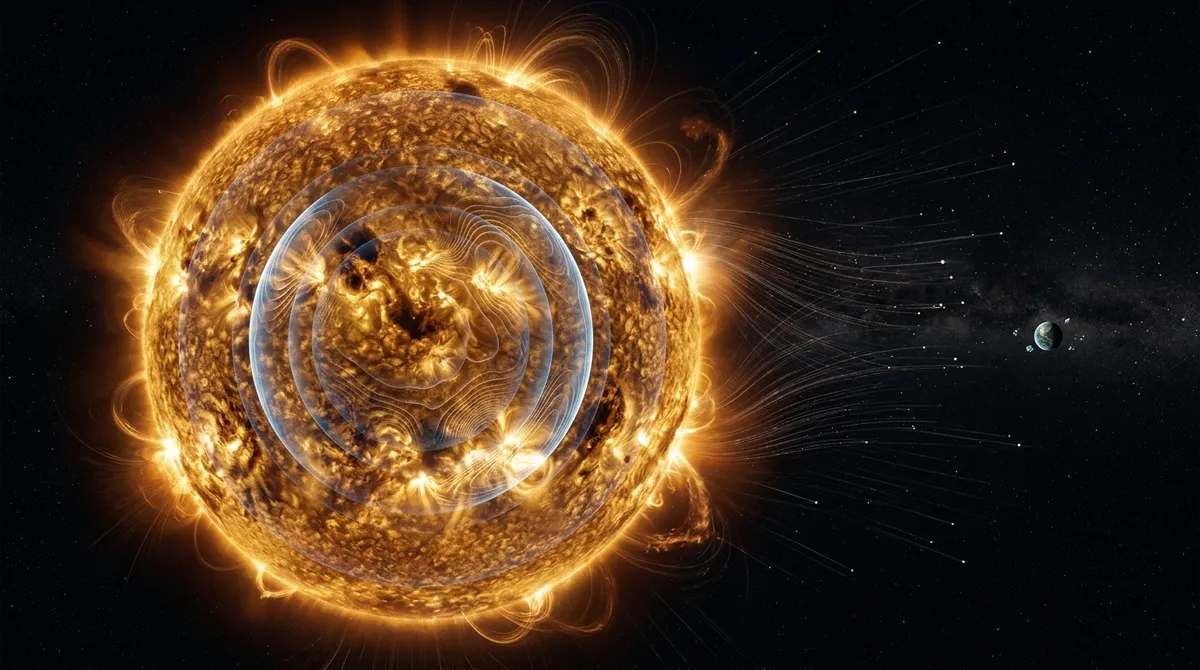
The research indicates that internal changes due to the sun's "active biorhythm" have become increasingly "skin-deep" over the past four solar activity cycles. This shift suggests that the sun's magnetic activity is concentrating closer to its surface rather than remaining deep within its interior.
How Scientists Listen to the Sun
Helioseismology works similarly to how geologists study Earth's interior through seismic waves. Sound waves generated by convection in the sun's outer layers travel through its interior, and their properties change based on the conditions they encounter. By analyzing these acoustic oscillations, scientists can peer inside the sun and detect changes invisible from the surface.
This "solar stethoscope" approach has revealed patterns that traditional sunspot observations couldn't capture. The technique allows researchers to monitor the sun's internal magnetic field behavior and how it evolves throughout the 11-year solar cycle.
Implications for Space Weather Forecasting
These findings raise important questions about how reliably current methods forecast space weather. If the sun's internal dynamics are changing in ways that surface observations don't fully capture, existing prediction models may need significant updates.
Space weather affects numerous technologies that modern society depends on daily. Solar storms can disrupt satellite communications, interfere with GPS navigation systems, damage power grids, and pose risks to astronauts and airline crews on polar routes.
The Technology Connection
Better understanding these hidden solar changes matters particularly for protecting critical infrastructure. Satellites are especially vulnerable to solar particle events and electromagnetic disturbances. Power grids can experience cascading failures when geomagnetic storms induce electrical currents in transmission lines.
Communications systems, from radio broadcasts to internet infrastructure relying on satellite connections, can face disruptions during major solar events. The increasing reliance on GPS for everything from ride-sharing apps to precision agriculture makes accurate space weather forecasting even more crucial.
Looking Ahead
The research suggests that Solar Cycle 25 may be stronger than surface indicators suggest, based on these internal acoustic signatures. This disconnect between internal activity and surface manifestations could explain why some space weather events seem to arrive with less warning than expected.
As our technological dependence grows, understanding these subtle changes in solar behavior becomes increasingly important. The ability to "listen" to the sun's interior may provide the missing piece in creating more accurate space weather prediction systems.
The study represents a significant step forward in solar physics, demonstrating how long-term acoustic monitoring can reveal trends invisible to conventional observation methods. With nearly 40 years of data now available, scientists have the historical baseline needed to identify these gradual but potentially significant changes in our star's behavior.
This research highlights the importance of continued investment in long-term scientific monitoring projects, as some discoveries only become apparent through decades of patient observation and data collection.