Revolutionary Solar Listening Technique Uncovers Hidden Changes
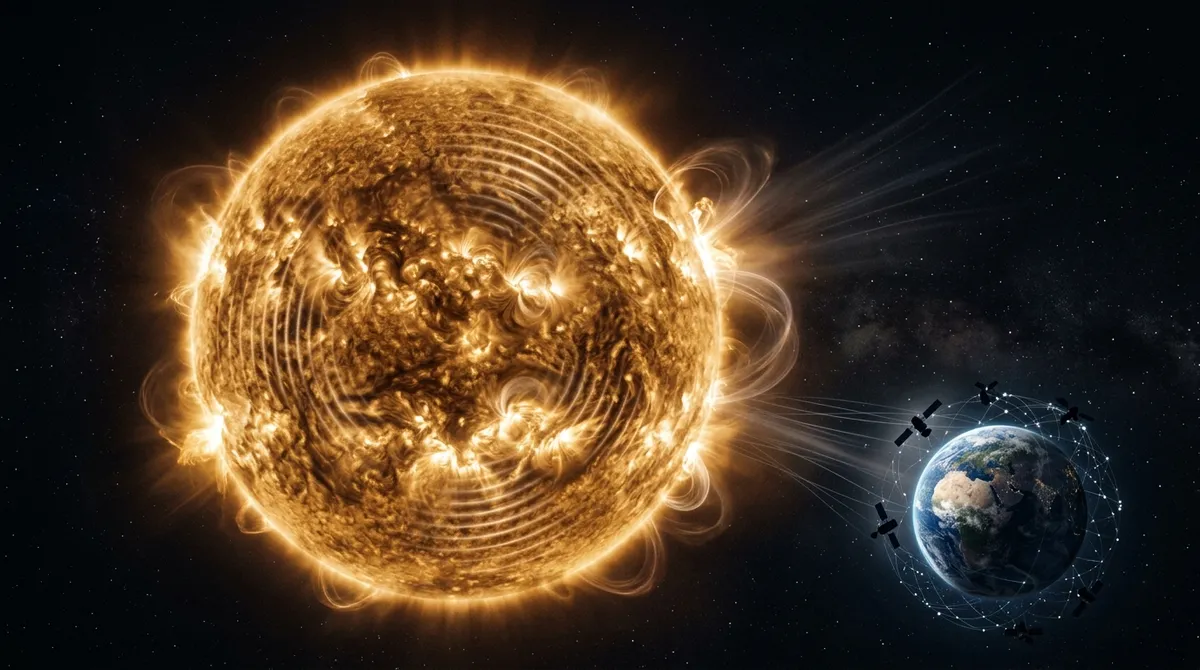
Scientists have developed a groundbreaking method to "listen" to the sun, revealing previously hidden changes in our star's behavior that could significantly impact how we predict space weather. Using a technique called helioseismology, researchers have discovered that the sun's magnetic activity appears to be shifting closer to the surface across recent 11-year solar cycles.
This discovery comes from analyzing nearly 40 years of data from the Birmingham Solar-Oscillations Network (BiSON), providing an unprecedented long-term view of the sun's internal dynamics. According to reports, the findings suggest that traditional methods of monitoring solar activity through sunspots and solar flares may be missing crucial deeper changes occurring within our star.
Understanding Solar Cycle 25's Hidden Strength
The research has particular relevance for Solar Cycle 25, which is currently underway. While surface indicators like sunspots might suggest this cycle appears weaker than previous ones, the helioseismology data reveals unusual internal signatures that tell a different story. This discrepancy raises important questions about the reliability of current space weather forecasting methods.
The sun operates on an 11-year cycle of magnetic activity, alternating between periods of high and low solar activity. During active periods, increased solar storms and flares can pose significant threats to satellites, GPS systems, communication networks, and power grids on Earth. Understanding these cycles is crucial for protecting modern technology infrastructure.
How Scientists "Listen" to the Sun
Helioseismology works by detecting sound waves that travel through the sun's interior. These acoustic oscillations provide scientists with a window into the sun's internal structure and magnetic field behavior, much like how seismologists use earthquake waves to study Earth's interior. The technique allows researchers to observe changes occurring deep within the sun that aren't visible on its surface.
The BiSON data spanning nearly four decades has enabled scientists to track how these internal solar dynamics have evolved across multiple solar cycles. This long-term perspective is essential for identifying patterns and trends that shorter observation periods might miss.
Implications for Space Weather and Technology
The study's findings have significant implications for space weather prediction and the protection of technology systems. According to reports, internal changes due to the sun's "active biorhythm" have become increasingly "skin-deep" over the past four solar activity cycles. This shift in the location of magnetic activity could affect how solar storms develop and propagate toward Earth.
Satellites orbiting Earth are particularly vulnerable to solar storms, which can damage electronic systems and disrupt communication services. GPS navigation systems, widely used in everything from smartphone mapping to aviation, can also experience significant accuracy problems during periods of intense solar activity.
Power grids represent another critical vulnerability, as geomagnetic storms triggered by solar activity can induce electrical currents in transmission lines, potentially causing widespread blackouts. The 1989 Quebec blackout, which left millions without power for hours, demonstrates the real-world impact of space weather on electrical infrastructure.
Advancing Solar Physics Understanding
This research represents a significant advancement in solar physics, demonstrating how helioseismology can complement traditional solar observation methods. By combining surface observations with internal sound-wave data, scientists can develop a more complete picture of solar behavior and improve their ability to predict space weather events.
The findings suggest that relying solely on visible solar activity indicators may provide an incomplete understanding of the sun's behavior. The discovery that magnetic activity is moving closer to the sun's surface could explain why some solar cycles appear different when viewed through traditional metrics versus internal measurements.
Looking Toward Better Space Weather Forecasts
As our society becomes increasingly dependent on technology systems vulnerable to space weather, improving our ability to predict solar storms becomes ever more critical. This research provides valuable insights that could enhance space weather forecasting models and help protect vital infrastructure from solar-induced disruptions.
The study's emphasis on long-term data collection also highlights the importance of sustained scientific observation programs. The nearly 40-year BiSON dataset represents an invaluable resource for understanding solar behavior patterns that might not be apparent in shorter observation periods.
By continuing to "listen" to the sun through helioseismology, scientists are opening new avenues for understanding our star's complex behavior and its effects on Earth's technological civilization.