
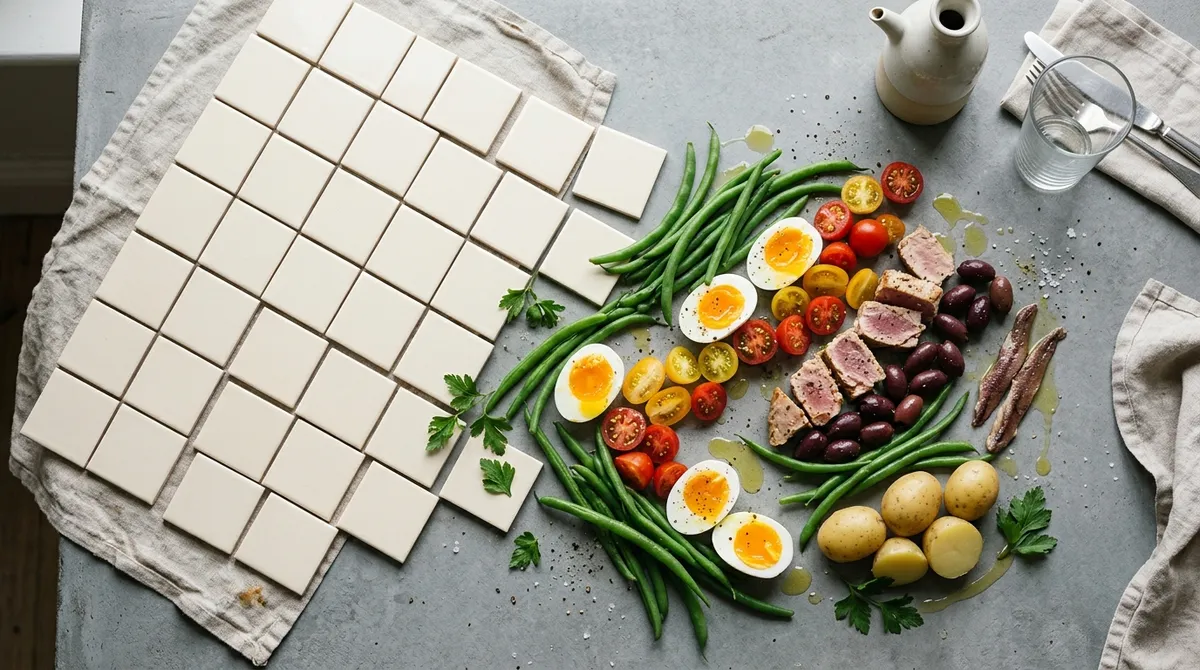
If today's New York Times Strands puzzle has you circling the grid without a clear path, you are not alone. The May 11, 2026 puzzle uses the theme A Nice Medley, and the wording points toward a clever food clue rather than a simple description of something pleasant. Below, you will find spoiler-safe guidance first, followed by the full Strands answer set for players who want to check the board or finish quickly.
NYT Strands Hints for May 11, 2026
Strands can be tricky because the theme often works on more than one level. Today's clue looks friendly at first glance, but the key is the word Nice. Read it as a place name, not only as an adjective. That shift changes the puzzle from a vague collection of pleasant things into a specific culinary reference.
The theme A Nice Medley points toward Nice, the coastal city in southern France. Once you make that connection, the rest of the puzzle becomes much easier. The answer set centers on a famous dish linked to that region. Think of ingredients that would appear together on a composed salad rather than foods mixed randomly in a bowl.
How to Approach Today's Strands Puzzle
Start by scanning the grid for short food words. In Strands, shorter answers are often useful anchors because they confirm the theme early. Words with three to five letters can help you open the board and reveal more space for longer entries.
For this puzzle, look for familiar salad components. Fish, vegetables, and pantry items all play a role. The words are not obscure, but the theme connection may feel hidden until the spangram becomes clear. If you have found one or two ingredients, use them to test the surrounding letter paths before spending hints.
Remember that Strands answers can bend in any direction. A word may travel horizontally, vertically, diagonally, or turn several times. Do not assume an ingredient has to appear in a straight line. If a partial word seems promising, keep tracing nearby letters until the full entry forms.
Today's Spangram Hint
The spangram is the main phrase that ties every theme answer together. For the May 11 puzzle, it names the dish that explains the entire ingredient list. It is a classic salad associated with Nice, France. If you know French-inspired restaurant menus, you may recognize it quickly.
Another helpful hint: the spangram includes the word salad. It also contains a regional term often written with an accent in food writing, though the puzzle grid uses plain letters. Once you identify this phrase, the remaining answers should feel much more logical.
Spoiler Warning: Full Strands Answers Ahead
The next section reveals the complete solution for today's NYT Strands puzzle. Stop here if you still want to solve the board on your own. If you want confirmation, or if one final word is blocking your progress, continue below for the full answer list.
NYT Strands Answer Today: A Nice Medley
The spangram for today's Strands puzzle is SALADNICOISE. This phrase identifies the dish behind the clue and explains why the theme uses Nice in such a pointed way. A salade Niçoise is traditionally connected to Nice, and the puzzle fills the board with ingredients associated with that dish.
The theme answers are TUNA, EGG, OLIVE, TOMATO, BEANS, POTATO, and ANCHOVY. Together, these words create the culinary medley hinted at in the theme. Some entries appear as singular forms, which can slow down solvers who expect plural ingredient names. If you searched for olives or eggs, trimming the word back may have helped reveal the correct path.
Complete Answer List
- Spangram: SALADNICOISE
- Theme words: TUNA, EGG, OLIVE, TOMATO, BEANS, POTATO, ANCHOVY
Why the Theme Works
This is a strong Strands theme because it rewards a small interpretive leap. The phrase A Nice Medley sounds like it might describe a pleasant mix of items. However, the capitalized wording steers solvers toward Nice as a location. That makes the clue more precise and more satisfying once the solution clicks.
Salad Niçoise is a composed salad rather than a tossed green salad. It is usually built from distinct ingredients arranged together, which makes the word medley especially fitting. The puzzle extracts those recognizable parts and scatters them through the grid, giving players several possible entry points.
The food vocabulary also creates useful variation. TUNA and EGG are compact. TOMATO, POTATO, and ANCHOVY take more room. OLIVE and BEANS sit in the middle. This mix of lengths helps the board feel balanced while still demanding careful tracing.
Tips If You Got Stuck
If this puzzle slowed you down, the likely issue was the theme interpretation. Many Strands puzzles use small puns, cultural references, or alternate meanings. When a clue seems too broad, look for hidden specificity. A capitalized word may be a proper noun. A common phrase may point to a song, movie, place, sport, or food.
Another useful strategy is to identify the category before hunting every word. For this puzzle, the category is ingredients in Salad Niçoise. With that frame, the board becomes easier to navigate. Instead of searching blindly, you can test a short mental list against available letters.
Also watch for singular and plural traps. Strands does not always use the form you expect from everyday speech. You might say tomatoes and olives at the table, but the puzzle can use TOMATO and OLIVE if those forms fit the grid. When a word almost works, try its simpler form.
How Strands Differs From Other NYT Games
Strands shares the daily habit appeal of Wordle and Connections, but it asks for a different kind of pattern recognition. Wordle focuses on deduction through letters. Connections asks players to group words by shared meaning. Strands combines vocabulary, spatial reasoning, and theme interpretation into one grid.
The spangram adds an extra layer. It is not just another answer — it is the puzzle's backbone. Finding it early can turn a difficult board into a manageable one. Finding it late can create a satisfying final reveal, especially when the smaller words already hint at the category.
Today's puzzle is a good example of that design. The individual entries are normal food words, but the full solution depends on understanding their shared destination. The answer is not simply salad ingredients — it is a specific salad with a regional identity.
Final Thoughts
The May 11, 2026 NYT Strands puzzle delivers a neat blend of wordplay and food knowledge. A Nice Medley hides its clue in plain sight, using geography to point toward Salad Niçoise and its familiar ingredients. Once the spangram appears, the rest of the board falls into place with a satisfying logic.
If you solved it without help, this was a rewarding test of flexible thinking. If you needed a hint, the lesson is simple: in Strands, every word in the theme can matter. Sometimes one capital letter is enough to change the entire puzzle.